
The Offshore Company Formation Process: Step-by-Step Guide


Understanding the formation process is key for anyone considering UAE offshore company setup. The good news is that offshore company registration in Dubai is very straightforward compared to many other jurisdictions, typically taking 3-5 business days from start to finish when working with experienced formation services.
RAK Offshore Incorporation Advantages
RAK offers a fast incorporation process, often completing registration within just a few days. The benefits include 100% foreign ownership, access to local real estate, ability to conduct international business, while noting compliance requirements and the advantages of using a registered agent for the process.
Choosing the Right Jurisdiction
Popular Offshore Jurisdictions
The journey starts with selecting the right offshore jurisdiction for your needs. RAK ICC is the most popular choice due to its cost-effectiveness and streamlined processes, but JAFZA Offshore offers advantages for businesses that require a Dubai address, while Ajman has certain benefits for specific industries. Ajman Free Zone is known for its cost-effective and competitive offshore incorporation services. Your choice should align with your business objectives, banking preferences, and long-term plans.
Step-by-Step Offshore Company Setup
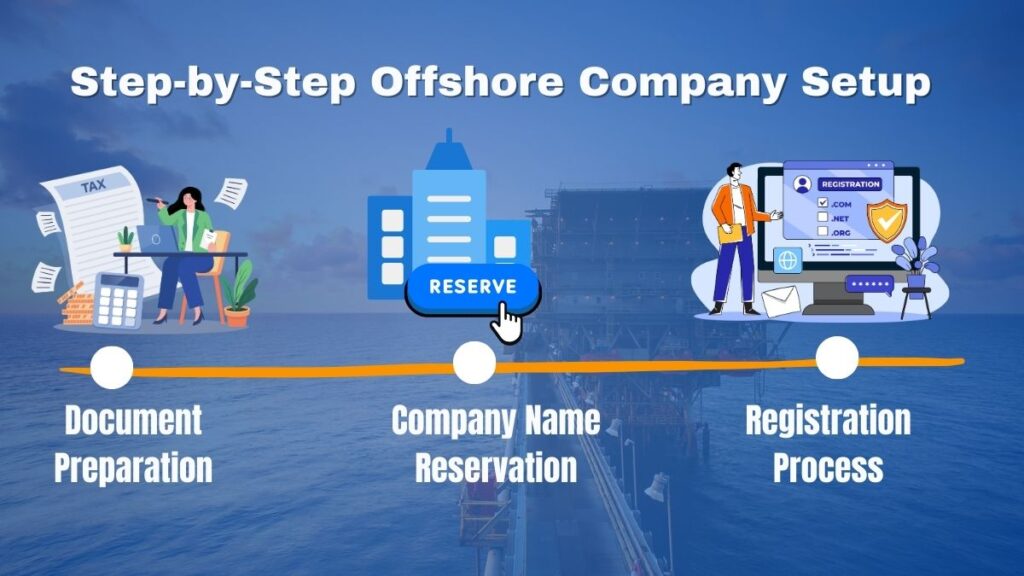
1. Document Preparation
Document preparation is the first step of your application. You will need to provide passport copies for all shareholders and directors, proof of address (usually a recent utility bill), a brief description of your business activities and potentially a bank reference letter. Some jurisdictions may require additional documents like a business plan or CV but the requirements are minimal compared to many other international jurisdictions. At this stage, it’s also wise to explore trademark registration for your brand name or logo, ensuring your identity is safeguarded across markets.
2. Company Name Reservation
Company name reservation is the next step. Your chosen name must be unique and comply with the jurisdiction’s naming regulations. Certain words are restricted or require special approval like “bank”, “insurance” or “royal”. The approval process is usually quick, often within 24 hours if your proposed name meets all requirements.
3. Registration Process
Once your name is approved and documents are submitted, the actual registration process begins. This involves preparation of constitutional documents (Memorandum and Articles of Association), issuance of share certificates and registration of your company with the relevant offshore authority. During this time you will also receive your certificate of incorporation and other corporate documents.
Banking and Compliance
Bank Account Opening
Bank account opening is the most important step after formation. While company formation is quick, banking can take 2-8 weeks depending on the bank and your business. UAE banks have become more selective so proper documentation and a clear business plan is essential. Many formation services can facilitate introductions to banking partners and guide you through the application process.
Certificates and Annual Compliance
The final steps involve obtaining any additional certificates you may need such as a certificate of good standing or a tax residency certificate. These may be required for international business or to claim treaty benefits in other jurisdictions. Annual compliance requirements are minimal but important, typically involving payment of renewal fees and filing of basic information updates.
Cost Structure and ROI Analysis
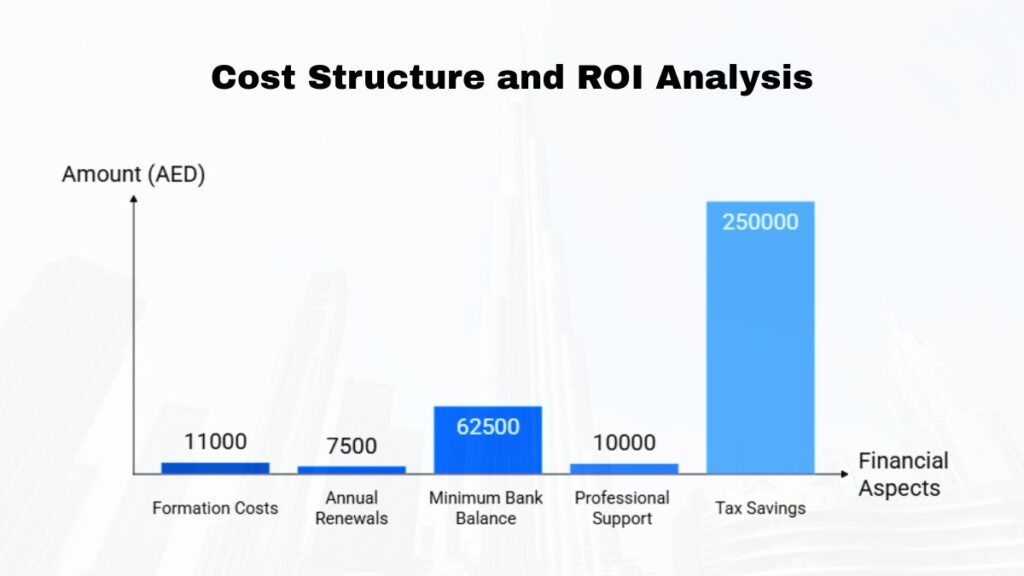
Let’s talk numbers – because understanding the real costs and potential returns is key to making an informed decision about UAE offshore company formation. The initial setup fees range from AED 7,000 to 15,000 ($1,900 to $4,100) depending on the jurisdiction and complexity of your requirements. This includes government fees, registered agent services and basic corporate documentation.
One of the most cost-effective options is RAK offshore company formation which benefits from Ras Al Khaimah’s business friendly environment and high level of industrialization, offering significant cost savings and good returns on investment.
Annual renewal and maintenance costs are equally important to consider. These range from AED 5,000 to 10,000 per year and cover government fees, registered agent services and maintenance of your registered office address. While these may seem like a lot of money, they are a small price to pay for the tax savings most international businesses enjoy.
Banking costs deserve special attention. UAE banks require minimum balance of AED 25,000 to 100,000 for corporate accounts. Transaction fees, international wire charges and currency conversion fees should all be factored into your calculations. However, the sophisticated banking services available often justify these costs through improved operational efficiency.
Professional service charges for ongoing support, accounting and compliance can add another layer of expense. Budget AED 5,000 to 15,000 per year for quality professional support though this can vary significantly based on your business complexity and service requirements. The ROI calculations tell a great story. Consider a business generating $1 million in international revenue.
In many jurisdictions this could result in corporate tax liabilities of $150,000 to $350,000. With a UAE offshore structure this tax liability is zero on foreign sourced income. Even accounting for all setup and maintenance costs most businesses recover their investment within 6-12 months through tax savings alone.
Real world examples illustrate this even better. An e-commerce business saving over $200,000 in the first year alone by restructuring through a UAE offshore company. A consultancy firm providing services to clients across Asia and Europe reduced their effective tax rate from 28% to 0% on international income. These are not isolated cases – they are the typical results achieved by businesses that structure their international operations correctly.
Hidden costs can sometimes surprise the unprepared. These might include document attestation fees, translation costs for non-English documents and professional fees for complex structuring advice. Some businesses also underestimate the costs of maintaining substance in their chosen jurisdiction. Being aware of these potential costs helps you budget accurately and avoid surprises.
Compliance and International Regulations
Navigating Offshore Compliance
Navigating the compliance landscape can seem daunting but understanding the requirements is key to maintaining your offshore company’s benefits while staying on the right side of international regulations. The Common Reporting Standard (CRS) is one of the most significant compliance considerations. The UAE is a CRS member and automatically exchanges information with other CRS member countries, so your offshore company’s financial information may be shared with your country of tax residence.
Key International Tax Laws
OECD Guidelines and Registered Agents
Offshore companies must adhere to international tax laws such as OECD guidelines on Base Erosion and Profit Shifting. Registered agents play a crucial role in navigating compliance and regulatory requirements, offering specialized offshore company formation services in Dubai. They handle communications with authorities and facilitate various administrative tasks to ensure your company meets all necessary obligations.
US Compliance Requirements
FATCA for US Persons
FATCA applies specifically to US persons (citizens, green card holders and tax residents). If you are a US person your UAE offshore company will need to comply with additional reporting requirements. Banks will typically require you to complete FATCA declarations and certain information about your accounts may be reported to US authorities. This doesn’t eliminate the benefits of UAE offshore companies for US persons but does require careful planning and compliance.
Economic Substance and AML
Economic Substance Regulations
Economic substance regulations have become more important in recent years. While UAE offshore companies engaged in holding activities face minimal substance requirements, those conducting active business may need to demonstrate sufficient presence in the UAE. This could include having local directors, maintaining office space or conducting board meetings in the country. Understanding these requirements helps you structure your operations correctly from the start.
Anti-Money Laundering (AML) Compliance
Anti-money laundering (AML) compliance is another important aspect of your obligations. UAE banks and service providers have strict AML procedures and will require you to provide clear documentation about your business activities, source of funds and ultimate beneficial ownership. Keeping transparent records and being prepared to explain your business model helps ensure smooth banking relationships and ongoing compliance.
Ownership and Filing Requirements
Ultimate Beneficial Ownership (UBO) Rules
Ultimate beneficial ownership (UBO) rules require you to disclose the individuals who ultimately own or control your offshore company. This information is kept in a non-public register accessible only to relevant authorities. While this is a move away from complete anonymity, it aligns with international standards while still keeping you private from competitors and the general public.
Annual Filing Obligations
Annual filing requirements are minimal compared to many jurisdictions. Most UAE offshore companies only need to pay annual renewal fees and update basic information like director or shareholder changes. However, some jurisdictions may require annual declarations or certificates of good standing. Stay on top of these requirements to keep your company in good standing and retain all its benefits.
International Trade, Dividend Tax Optimization & Exit Tax Planning
International trading configurations leverage the UAE’s location and tax benefits. Your offshore company can act as a principal in international trade transactions, buying from suppliers in one country and selling to customers in another. This structure allows you to capture trading profits in a tax-free environment while potentially reducing overall supply chain costs. Dividend flow optimization is an art when planned correctly. By structuring the ownership chain and utilizing the UAE’s tax treaty network you can minimize or eliminate withholding taxes on dividends flowing from operating companies to your UAE holding company. Strategic use of treaty benefits can reduce tax leakage significantly compared to direct ownership structures.
Transfer pricing is key in international structures. Your UAE offshore company can provide management services, licensing arrangements or trading functions to related entities worldwide. When properly documented and priced at arm’s length these arrangements allow for tax efficient profit allocation while remaining fully compliant with international standards.
Treaty shopping exists within legal boundaries. The UAE’s extensive treaty network allows for strategic routing of investments and income flows to minimize overall tax burden. However this requires careful attention to substance requirements and anti-avoidance rules to ensure your structures are robust and defensible.
Exit strategy planning should start from day one. Whether you’re building a business to sell or just want flexibility for the future your UAE offshore structure can facilitate tax efficient exits. Strategic restructuring before a sale, using treaty benefits and timing considerations can make a big difference to the after-tax proceeds from any eventual transaction.
Legal Framework and Regulations
The UAE has a well established legal framework for offshore company formation supported by a robust regulatory environment to attract international businesses. This framework provides a secure and transparent environment for offshore companies to operate efficiently and effectively.
The regulations governing offshore companies in the UAE are a mix of federal legislation and specific rules for individual jurisdictions such as Dubai and Ras Al Khaimah. These regulations are carefully crafted to comply with international standards while being business friendly. This dual focus on compliance and ease of doing business makes the UAE an attractive destination for offshore company formation.
Each jurisdiction in the UAE has its own benefits and regulatory environment allowing businesses to choose the one that suits their operational needs and strategic goals. Whether you choose RAK International Corporate Centre, Jebel Ali Free Zone Authority or another jurisdiction you can be sure of a regulatory framework that supports your business objectives while maintaining high standards of corporate governance.
Registered Agent and Company Setup
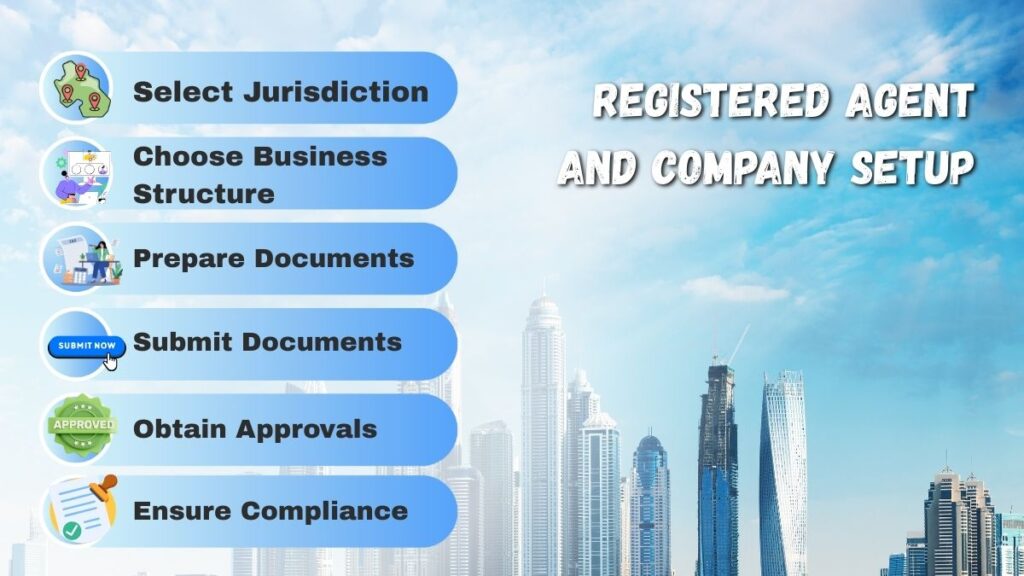
A registered agent is a crucial part of the offshore company formation process in the UAE. This agent must have a physical office and presence in the country to ensure your company is properly represented and compliant with local regulations. The registered agent plays a key role in guiding you through the company setup process from preparing and submitting the necessary documents to ensuring all eligibility criteria are met.
The company setup process typically starts with selecting the right jurisdiction for your business. This decision should be based on your specific business needs including the type of activities you will be undertaking and your long term strategic goals. Once the jurisdiction is chosen the registered agent will assist in selecting the appropriate business structure and meeting all eligibility requirements.
The registered agent’s expertise ensures your company is properly registered and compliant with all relevant regulations. This includes preparing essential documents such as the Memorandum and Articles of Association, obtaining necessary approvals and ensuring your company meets all legal requirements. By using the services of a registered agent you can navigate the offshore company formation process with ease and confidence.
Nominee Services and Corporate Governance
Nominee services are available for offshore companies in the UAE offering an additional layer of anonymity and privacy for business owners. These services can be used for both directors and shareholders providing a streamlined approach to corporate governance. By appointing nominee directors and shareholders you can maintain control of your company while enjoying more privacy and protection.
The use of nominee services can greatly enhance the overall governance and management of your offshore company. These services ensure your company complies with all relevant regulations while maintaining high corporate governance. This is particularly important in the UAE where the regulatory environment is designed to promote transparency and accountability.
Corporate governance is a key part of offshore company formation and companies must ensure they comply with all relevant regulations. The UAE’s regulatory framework supports high corporate governance standards providing a secure and transparent environment for business operations. By using nominee services and following best practices in corporate governance you can ensure the long term success and stability of your offshore company.
Real Estate Ownership and Investment

Offshore companies in the UAE can own property and invest in real estate subject to certain regulations and restrictions. The regulations for real estate ownership and investment vary by jurisdiction so make sure you comply with all relevant laws and regulations. Jebel Ali Free Zone (JAFZA) is the only offshore jurisdiction in the UAE that permits direct ownership of real estate in Dubai.
Real estate ownership and investment offers many benefits for offshore companies including asset protection and potential long term appreciation in value. By investing in the UAE’s highly developed real estate market offshore companies can diversify their asset portfolio and benefit from the country’s economic growth.
To own and invest in real estate offshore companies must be properly registered and licensed. This ensures all activities are conducted in compliance with local regulations providing a secure and transparent environment for real estate transactions. The UAE’s real estate market offers many opportunities for investment and ownership making it an attractive option for offshore companies to enhance their asset portfolio. By complying with real estate ownership and investment regulations offshore companies can make the most of the UAE’s real estate market.
Safeguarding Assets and Ensuring Privacy
Legal protection from international lawsuits is another big advantage. Assets held within a properly structured UAE offshore company benefit from the jurisdiction’s legal framework which makes it difficult for foreign creditors or litigants to access these assets. This doesn’t mean you can engage in illegal activities with impunity, but it does provide legitimate protection against frivolous lawsuits or unfair legal actions in other jurisdictions.
Banking privacy laws in the UAE add another layer of security. While the country cooperates with international investigations into serious crimes, it maintains strong protections for legitimate business banking activities. Your offshore company’s financial affairs remain confidential, protected by both banking regulations and the overall legal framework that governs offshore entities.
For those seeking additional privacy, nominee services are available. Professional nominee directors and shareholders can be appointed to appear on public records while you maintain actual control through private agreements. This structure, when properly implemented, provides an extra layer of privacy without compromising your ability to manage and benefit from your business operations.
Combining trust and foundation structures with offshore companies opens up advanced asset protection strategies. By combining these legal entities you can create multi-layered protection that addresses various risks while maintaining operational flexibility. This is particularly useful for businesses with complex international operations or significant assets across multiple jurisdictions.
Common Mistakes and How to Avoid Them
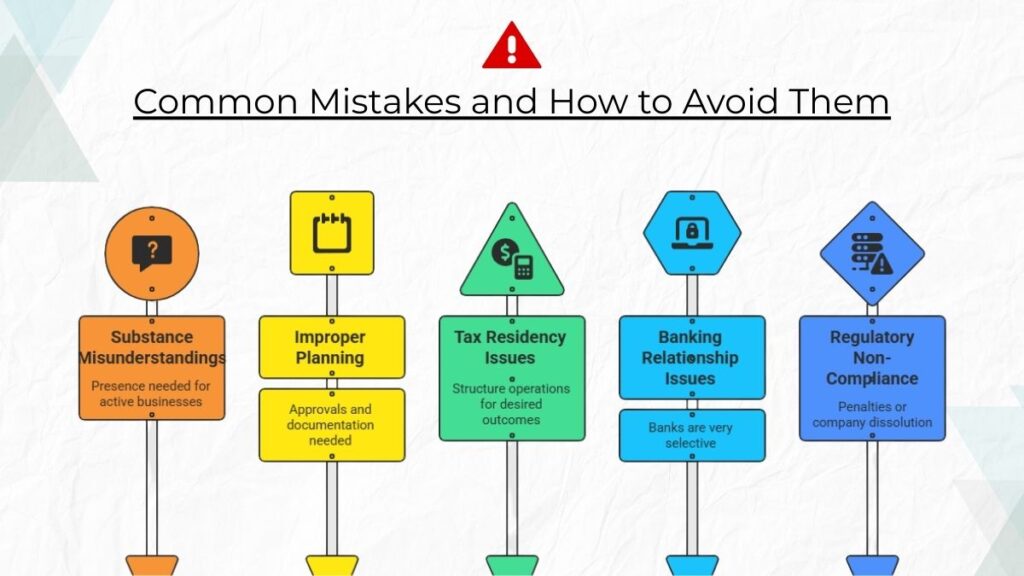
Learning from others’ mistakes can save you time, money and frustration. Substance requirement misunderstandings top the list of common mistakes. Many business owners assume that simply registering a company is enough, not realizing that active businesses may need to demonstrate real presence in the UAE. Avoid this by understanding your specific requirements based on your business activities and planning accordingly from the start.
Proper planning and compliance is key in an offshore business setup. Make sure you have the necessary approvals and documentation to leverage the benefits of operating in free zones like tax free status and full foreign ownership.
Improper tax residency claims can cause big problems for the unprepared. Having a UAE offshore company doesn’t automatically make it UAE tax resident. Without proper substance and management in the UAE your company might be considered tax resident in another jurisdiction potentially negating many benefits. Understand tax residency rules in all relevant jurisdictions and structure your operations to achieve your desired tax outcomes.
Banking relationship issues frustrate many new offshore company owners. UAE banks have become very selective and approaching them without proper preparation often results in rejections. Avoid this by working with experienced advisors who understand banking requirements, preparing comprehensive business plans and being transparent about your intended activities.
Regulatory non-compliance can turn your offshore advantage into a liability. Failing to renew annually, update corporate information or comply with economic substance requirements can result in penalties or even company dissolution. Create proper compliance calendars and work with reliable service providers — such as Hope Ventures’ corporate secretarial services to ensure nothing falls through the cracks.to ensure nothing falls through the cracks.
Hidden operational costs surprise many business owners. Beyond the obvious fees you might encounter unexpected expenses for document attestation, additional banking services or professional advice for complex transactions. Build a comprehensive budget that includes contingencies for these potential costs to avoid cash flow surprises.
Choosing the wrong jurisdiction can limit your options later. Each UAE offshore jurisdiction has its unique characteristics that might seem minor initially but become significant as your business grows. RAK ICC might be perfect for a holding company but less ideal if you need a Dubai address for banking purposes. Take time to understand the nuances of each jurisdiction before making your choice.
DIY formation risks often outweigh any perceived savings. While it’s technically possible to form a UAE offshore company yourself the complexity of banking requirements, substance regulations and compliance obligations make professional assistance invaluable. The cost of fixing mistakes or missed opportunities typically far exceeds the fees for quality formation services.
FAQ
What is the minimum capital required for a UAE offshore company?
One of the biggest advantages of UAE offshore company formation is that there’s no minimum capital requirement in most jurisdictions. Unlike many countries that demand substantial paid-up capital, UAE offshore jurisdictions like RAK ICC and JAFZA Offshore allow you to register your company with a nominal share capital, typically just 1 AED. This means you don’t need to lock up significant funds just to establish your business entity.
Additionally UAE offshore companies can have 100% foreign ownership without the requirement for local shareholding, making it an attractive option for entrepreneurs and startups.
However it’s worth noting that while there’s no legal minimum for company formation, practical considerations come into play. Banks typically require higher balances for opening corporate accounts (usually between AED 25,000 to 100,000) and having adequate capitalization can enhance your company’s credibility with business partners. The beauty of this flexible approach is that you can start with minimal capital and increase it as your business grows without regulatory pressure to maintain specific capital levels.
Can a UAE offshore company do business in UAE mainland?
This is a common misconception about UAE offshore companies. The short answer is no – offshore companies cannot directly do business within the UAE mainland or local market. They’re designed for international business activities meaning all revenue must come from outside the UAE. An offshore business in Dubai offers benefits such as tax free status and 100% foreign ownership making it an attractive option for international entrepreneurs. However, offshore companies in the UAE are not eligible for applying for any shareholder or employee visas, which is a key distinction from onshore or free zone entities.
Think of it this way: your UAE offshore company can trade with businesses in Europe, Asia, America or anywhere else in the world but it cannot sell products or services to customers within the UAE. This restriction is what enables the zero tax benefit on foreign sourced income. If you need to do business both internationally and within the UAE you might consider a dual structure – having an offshore company for international operations and a separate mainland or free zone entity for local UAE business. This combination allows you to optimize benefits for different aspects of your business operations.
How long does it take to open a bank account for a UAE offshore company?
While the company formation itself takes just 3-5 days, opening bank accounts for offshore companies in the UAE is crucial and requires more time and patience. The incorporation of an offshore company in Dubai can typically be completed in 2-3 working days if all documents are in place. Opening a corporate bank account usually takes 2-8 weeks depending on the bank you choose, the complexity of your business model and the completeness of your documentation. UAE banks have become more selective in recent years and have implemented stricter know-your-customer (KYC) and anti-money laundering (AML) procedures.
The process involves submitting detailed business plans, financial projections and extensive documentation about company ownership and intended activities. Some banks may require in-person meetings with all signatories while others may accept video calls for initial interviews. Working with experienced business setup consultants can significantly streamline this process as they often have established relationships with banks and know what each bank requires.
The key to faster account opening is preparation – having all documents ready, a clear business plan and transparent explanations of your intended business activities. Compliance checks during this process may take longer to complete, so patience and thorough preparation are essential.
Disclaimer: Hope Ventures FZ-LLC provides Guidance for businesses preparing to participate in public sector opportunities.


