
Mainland vs. Freezone: What’s the Diff?
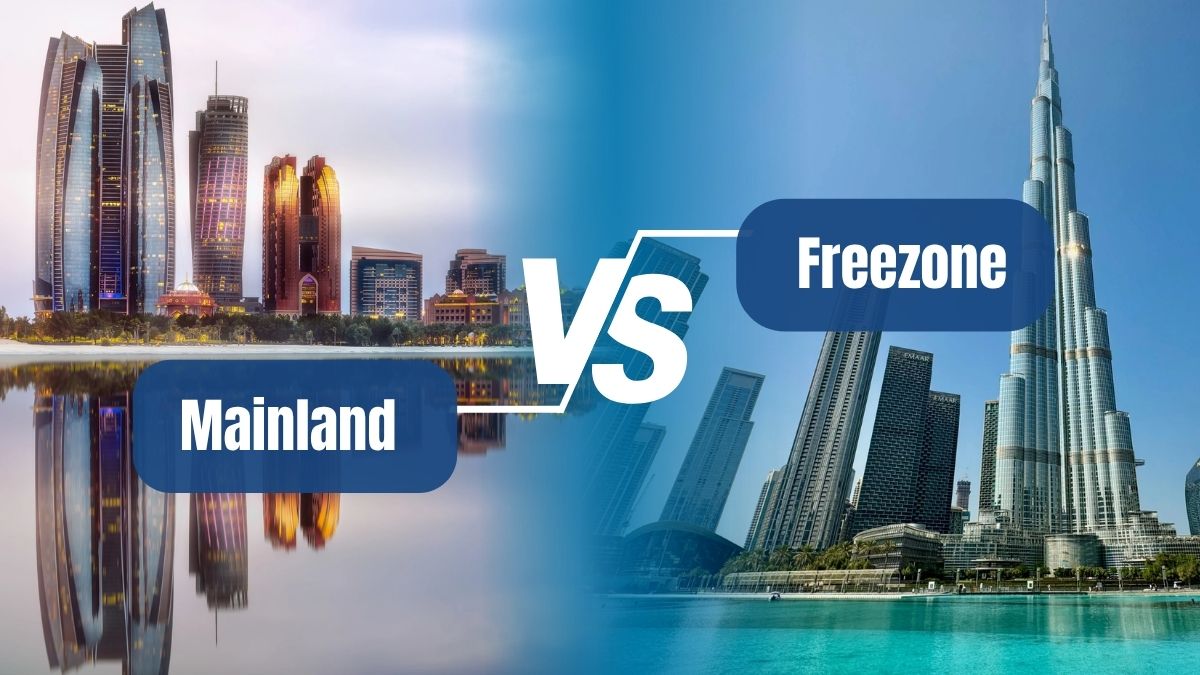

So, you’re thinking about setting up shop in the UAE and wondering about the whole mainland versus freezone thing? It’s a big decision, and honestly, it can feel a bit confusing at first. Both have their perks, but they’re pretty different. We’re going to break down what makes them tick, so you can figure out which one is the better fit for your business idea. Let’s get into the nitty-gritty of the mainland vs freezone debate.
Key Takeaways
- Mainland companies can operate anywhere in the UAE and deal directly with local customers, while free zones are usually limited to their specific zone and international markets.
- Foreign ownership rules differ: mainland companies may need a local partner (though 100% ownership is now possible in many sectors), while free zones typically allow 100% foreign ownership.
- Taxation is a big difference: free zones often offer tax exemptions, whereas mainland companies are subject to corporate tax (9% on profits over AED 375,000) and VAT.
- Setting up a mainland company usually involves more paperwork and can take longer than setting up in a free zone, which often has a streamlined process.
- Your business activity and where you plan to sell your products or services are the biggest factors in deciding between mainland vs freezone.
- Understanding the Basics: Mainland vs. Freezone
- Key Differences at a Glance
- Pros and Cons of Each Option
- Which is Right for Your Business?
- So, What's the Verdict?
- Frequently Asked Questions
- Can I sell my products anywhere in the UAE if I set up in a Free Zone?
- Do I need a local partner to start a business?
- Are there tax differences between Mainland and Free Zone companies?
- Which type of company is easier to set up?
- Can I have a physical office with a Free Zone company?
- Which is better for reaching customers in the UAE?
Understanding the Basics: Mainland vs. Freezone

What is a Mainland Company?
Setting up company in Dubai mainland means you’re registering your business with the Department of Economic Development (DED) in one of the emirates. A mainland company can operate anywhere across the UAE and isn’t limited by geography, making it really flexible for those who want to sell directly to local customers. Here’s what you’ll deal with:
- Regulated by the DED.
- Can trade directly with clients all over the UAE and even apply for government contracts.
- Often requires an Emirati partner to hold 51% of shares (though some activities now allow 100% foreign ownership).
- Needs a physical office space within the UAE.
- Requires an annual financial audit and regular compliance checks.
Many entrepreneurs choose the mainland route to reach the broader local market instead of limiting themselves to one economic zone.
What is a Freezone Company?
A freezone company is set up in one of the UAE’s designated business hubs—called free zones—that are designed to attract overseas investors. The advantages of free zone entity depend a lot on your business type and where you need to operate. Here’s a quick breakdown:
- Regulated by its own Free Zone Authority, not by the DED.
- You get 100% foreign ownership—no need for a local sponsor.
- Business activities are usually limited to the free zone or international markets.
- Some free zones target specific industries, like tech or finance.
- The process is usually faster and paperwork is lighter compared to mainland setups.
- Physical office requirements may be flexible or even optional, depending on the zone.
For many, the main dubai free zone company benefits include full profit repatriation, easy import/export, and generous tax incentives, particularly for international operations. Still, you can’t directly do business on the Dubai mainland unless you work with a local distributor or open a branch through proper licensing.
| Company Type | Ownership | Market Access | Licensing |
|---|---|---|---|
| Mainland | Up to 100% (in many sectors) | Anywhere in UAE | DED |
| Freezone | 100% Foreign | Inside free zone & abroad | Free Zone Authority |
If you’re looking for a quick setup and tax savings, free zones may fit the bill. But if you want to target the UAE’s broader market, mainland is often the better route. You can weigh more factors in making your choice by looking at the key differences between structures.
Key Differences at a Glance

So, you’re looking to set up shop in the UAE and wondering about the big differences between a mainland company and a freezone one? It’s a common question, and honestly, it’s not as complicated as it might seem at first. Let’s break down the main points so you can get a clearer picture.
Ownership and Control
This is a pretty big one for a lot of people. With a freezone company, you can own 100% of your business. No local partner needed, no sharing control. It’s all yours. Mainland companies, on the other hand, used to require a local sponsor or agent holding at least 51% of the shares for most business types. However, recent changes mean that for many activities, 100% foreign ownership is now possible on the mainland too. Still, it’s worth checking the specifics for your particular industry.
Licensing and Business Activities
Your business activity really dictates where you should be. If you want to trade directly with customers all over the UAE, or engage in certain professional services like contracting or retail, the mainland is usually the way to go. You’ll get a license from the Department of Economy and Tourism (DET). Freezones have their own specific licenses, and they’re generally geared towards international trade, consulting, or specific industries like tech or media. Trying to do direct business on the UAE mainland with a freezone license can get tricky and might require a local distributor.
Taxation Benefits
This is where freezones often shine. Many offer significant tax advantages, like 0% corporate tax on qualifying income and 0% personal income tax. It’s a big draw for startups and international businesses. Mainland companies, however, are subject to corporate tax, which is currently set at 9% for taxable profits above a certain threshold. While this might sound like a disadvantage, remember that mainland companies often have broader market access, which can lead to higher revenue potential.
Location and Market Access
Think about where your customers are. If your primary market is within the UAE, a mainland company gives you direct access to all local customers and government entities. You can set up a physical office anywhere in the UAE. Freezone companies are based within their designated economic zones. While they can trade globally and even with other freezones easily, direct sales to the UAE mainland market often require extra steps or a local partner. It’s a trade-off between local reach and international focus. Setting up a business in Dubai involves weighing these factors carefully.
The choice between mainland and freezone isn’t just about cost; it’s about where you plan to operate and who you plan to sell to. Understanding your target market and operational needs is key to making the right decision for your business’s future growth.
Pros and Cons of Each Option
Mainland: Advantages and Disadvantages
Setting up a mainland company means you’re directly integrated into the UAE’s local economy. This gives you the freedom to trade anywhere within the UAE and even internationally without many restrictions. Plus, you can deal directly with government entities and secure local contracts, which is a big plus if that’s your game plan. The biggest advantage here is unrestricted market access within the UAE. You also get more flexibility when it comes to visas for your employees, which can be a lifesaver as your team grows. However, it’s not all sunshine and rainbows. Mainland setups often come with higher setup costs and more complex administrative requirements compared to free zones. You’ll also be subject to corporate tax, currently at 9% for qualifying income, which is something to factor into your budget.
- Advantages:
- Disadvantages:
Freezone: Advantages and Disadvantages
Freezones are like specialized economic zones, each with its own set of rules and benefits. They are often set up to attract specific industries or foreign investment. The main draw for many is the tax advantage – typically 0% corporate tax on qualifying income, which can significantly boost your bottom line. You also get 100% foreign ownership, which wasn’t always the case on the mainland. Setting up in a freezone is generally faster and cheaper than a mainland company. They are great for startups or businesses looking to target an international market. However, there’s a catch: your ability to trade directly within the UAE mainland is limited. You might need a local distributor or agent, or additional licensing, to sell your products or services directly to customers in the UAE. This can add complexity and cost if the local market is your primary target. Some freezones also have restrictions on the number of visas you can obtain, though this varies.
- Advantages:
- Disadvantages:
Choosing between mainland and freezone isn’t just about initial cost; it’s about where you plan to do business long-term and what kind of operational freedom you need. Think about your customers first.
Which is Right for Your Business?
So, you’ve looked at the differences between mainland and freezone setups, and now it’s time to figure out which one actually fits your business. This isn’t a one-size-fits-all situation, and honestly, picking the wrong one can make things way harder down the road. It’s not just about the initial cost, though that’s definitely a factor for most people starting out.
Think about where your customers are. If you’re planning to sell directly to people or businesses all over the UAE, a mainland company is usually the way to go. You get direct access to the whole market, which is pretty important if you’re, say, opening a shop or aiming for government contracts. On the other hand, if your sights are set on international clients, or if your business is primarily online, a freezone might be a better fit. Many freezones are set up to make international trade easier and often come with tax advantages. This is a big part of the uae business setup comparison that people often overlook.
Here’s a quick rundown to help you decide:
- Target Market: UAE local market? -> Mainland. International clients? -> Freezone.
- Business Activity: Retail, construction, or government work? -> Mainland. Consulting, e-commerce, or tech? -> Freezone.
- Ownership: Need 100% foreign ownership without hassle? Most mainland sectors now allow this, but it’s worth double-checking for your specific activity.
- Office Space: Mainland generally requires a physical office, while some freezones offer virtual options.
Don’t get too caught up in the cheapest option. While freezones can be more budget-friendly initially, consider the long-term revenue potential and operational flexibility. Sometimes paying a bit more upfront for mainland access can pay off significantly later.
Ultimately, the decision for choosing business jurisdiction uae comes down to your specific business model, your growth plans, and what you want to achieve. It’s about finding the structure that supports your goals, not just the one that seems easiest at first glance. Taking the time to weigh these factors will save you a lot of headaches later on.
So, What’s the Verdict?
Alright, so we’ve gone over the ins and outs of setting up shop in the UAE, looking at both the mainland and the free zones. It’s not a one-size-fits-all situation, right? Mainland gives you the freedom to really spread your wings across the whole country, which is great if you’re aiming for that local market. But, free zones? They come with their own set of perks, like simpler rules and often better tax breaks, especially if you’re thinking more internationally or have a specific industry in mind. Ultimately, the best choice really boils down to what you want to do with your business, who you want to sell to, and where you see yourself heading down the road. Take your time, figure out your game plan, and pick the spot that feels right for your venture.
Frequently Asked Questions
Can I sell my products anywhere in the UAE if I set up in a Free Zone?
Not really. If you set up in a Free Zone, you can mostly do business inside that zone or internationally. To sell your products on the UAE mainland, you’ll usually need to work with a local distributor or agent. Mainland companies, on the other hand, can sell anywhere in the UAE without these extra steps.
Do I need a local partner to start a business?
It depends! For a mainland company, you often need a local partner who owns at least 51% of the business. However, for certain types of businesses, you can now own 100% yourself. For Free Zone companies, you can almost always own 100% of your business, which is a big plus for foreign investors.
Are there tax differences between Mainland and Free Zone companies?
Yes, there are! Free Zone companies often get big tax breaks. They might not have to pay corporate tax or import duties, which can save a lot of money. Mainland companies have to pay corporate tax on their profits and also customs duties on imported goods.
Which type of company is easier to set up?
Generally, setting up a Free Zone company is quicker and involves less paperwork. The authorities in the Free Zones are designed to make things smooth and fast, often taking just a week or two. Mainland company setup can take longer, sometimes up to a month, because there are more steps and approvals involved.
Can I have a physical office with a Free Zone company?
Yes, you can! While Free Zones offer options for virtual offices, you can also get a physical office space within the Free Zone. However, mainland companies usually require a minimum amount of physical office space to operate.
Which is better for reaching customers in the UAE?
If your main goal is to sell directly to customers all over the UAE, a mainland company is usually the better choice. They have direct access to the entire local market. Free Zone companies are better if you’re focused on international sales or if you’re okay with working with local partners to reach the UAE market.


